The UN is only as strong as its 193 Member States want it to be
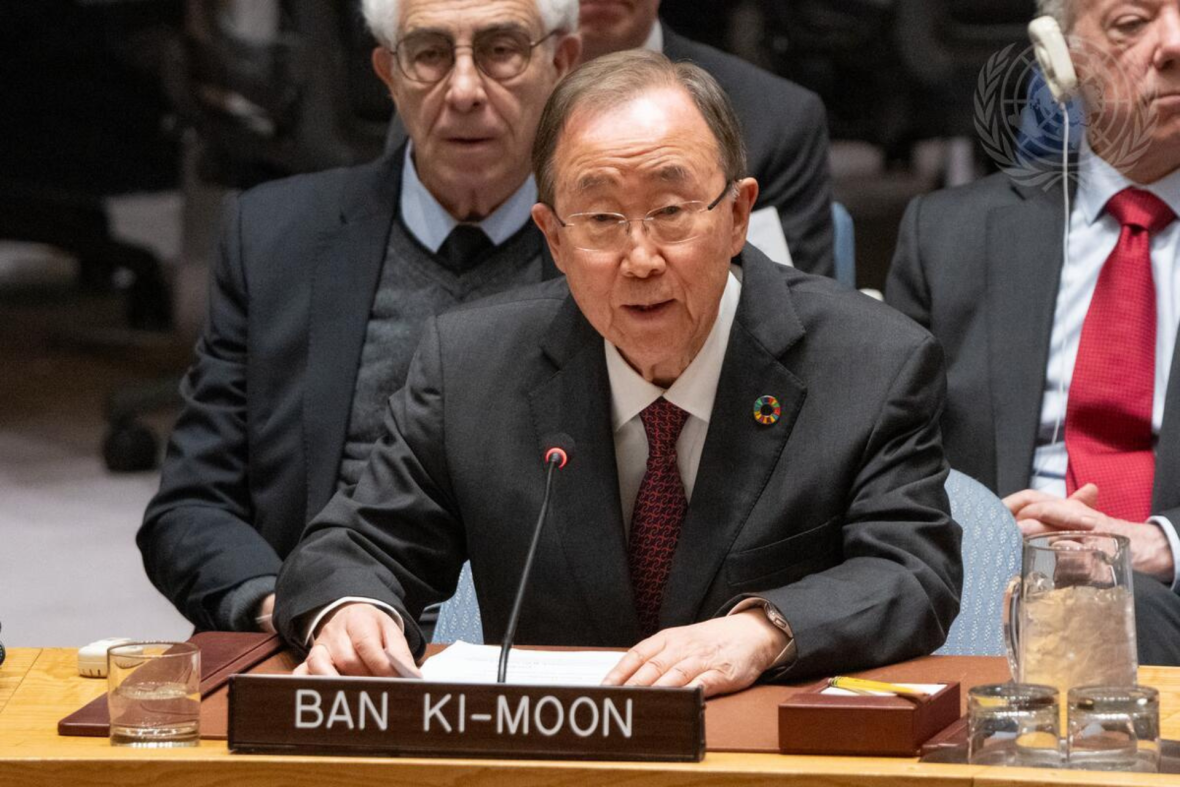
Watch his speech:
Read his speech:
Mr. President, Excellencies, distinguished members of the United Nations,
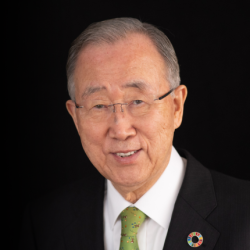
Coming back to the United Nations feels like coming back home. I am speaking today not only as a former Secretary-General but also as an Emeritus member of The Elders, the group of independent global leaders founded by Nelson Mandela who work for peace, justice, human rights and a sustainable planet.
I extend my special gratitude to the Security Council President for the month of December, his excellency Samuel Žbogar, the Permanent Mission of Slovenia to the United Nations, for inviting me to speak today in this always-inspiring august Chamber.
It has now been nine years since I left New York as UN Secretary-General. At that time, I felt a deep sense of fulfilment that the Paris Climate Change Agreement had entered into force.
The Paris Climate Change Agreement was a triumph of human intellect, and a significant historical example demonstrating the efficacy and victory of multilateralism. Global leaders came together to address a truly global issue.
That was one of the rare moments when all 193 Member States and two observer states - the Vatican and the State of Palestine - came together with all hands on deck. The adoption of the resolution was a great success for humanity and for the world.
The adoption of the 17 Sustainable Development Goals was another historic moment when all members came together. These are two important accomplishments of which I am proud to have served as Secretary-General of the United Nations.
However, I departed the UN with both feelings of accomplishment and a heavy heart. This was a result of major political turmoil driven by ISIS terror, the bloody Syrian Civil War and ensuing refugee crisis; Brexit and rising global populism; geopolitical tensions surrounding Russia; and North Korea's 4th nuclear test and human rights violations.
Now, compared to back then, the international situation appears to have deteriorated even further across multiple fronts. For that, I communicate my sincere consolations to my successor, Secretary-General António Guterres.
This deeply disappointing situation is characterised by confrontation rather than cooperation among major powers. It is marked by the illegal invasion of the sovereign state of Ukraine by a Security Council Permanent Member; conflict and mass civilian casualties in the Gaza Strip; and the weakening of international cooperation and erosion of multilateralism despite the escalating global climate crisis.
This, in turn, has become a crisis for the United Nations.
Mr. President, Excellencies,
The United Nations is the preeminent universal institution that fosters international cooperation within the current sovereign-state-centred international community; pursuing the common security and prosperity of humanity.
The governance of the UN is an outcome of compromise among its Member States. The UN, and its architecture, is only as strong as its 193 Member States want it to be.
As humanity’s universal body, the UN holds both hopes and inherent limits. We now try to do our utmost to realise the vision of the UN under certain limits. Thus, our efforts to this end should include change and vital reform of the UN to overcome such limits.
In this light, I am of the view that UN leadership must more confidently reassert its active political role in diplomacy for peace, including mediating and settling crises. Member States must support this role, and guard against situations in which only powerful countries dictate political settlements. And this needs to start here, in this Chamber.
Let me avail myself of this opportunity to make a humble suggestion based on my ten years of experience at the UN.
The next Secretary-General should be empowered by a single, seven-year term. Two five-year terms leave the Secretary-General overly dependent on this Council’s Permanent Members for an extension. This is a convention, not a Charter requirement, and the General Assembly holds the power to set the terms of the appointment itself.
Whoever is chosen as the next Secretary-General needs renewed commitment from all Member States to support and enable the Secretary-General’s unique role in helping to resolve conflicts.
Even though I did not agree that Secretary-Generals of the UN were called “secular Popes,” they had moral authority.
But they also have to hold actual power in order to mediate between two conflicting parties; and to more actively intervene in cases of serious breaches of international law and the Charter of the UN, such as atrocity crimes.
Mr. President, Excellencies,
Let us be clear-eyed in this Chamber here today. The current crisis at the UN stems from multiple causes; but the Security Council's ongoing failure to properly function constitutes the most egregious cause.
Indeed, if we are to truly promote leadership for peace, we must fundamentally reform and reinvigorate the way this Council operates. It must be made fit for purpose for the twenty-first century world, rather than the twentieth. The Council has long been plagued by divisions and disruptive tactics. But the irresponsible way many States now disregard their obligations today is especially concerning.
In particular, some Permanent Members of this Council regularly undermine the UN’s universal peace and security mandate; through their use of the veto to shield themselves, their allies, and their proxies from accountability.
Without concrete reforms to curb the arbitrary use, and misuse, of veto power by permanent members, the UN's sense of helplessness will not be overcome. Civilians will remain unprotected in conflict. Impunity will still reign.
Council reform is difficult yet urgent and possible. Without it, the UN risks lurching towards either collapse or irrelevance. Let us not succumb to passivity nor pessimism.
The UN Security Council’s successful expansion in 1965, which was driven by the General Assembly, shows us a way forward. Only one of the Permanent Members voted for the reform, but once the world had spoken, all five then undertook the ratifications needed for the change to come into force.
If the veto cannot be fully eliminated in the short term, efforts to actually limit its use should be strongly supported. A reformed model, which would serve the global community as a whole, could gain key widespread support.
I take this opportunity to encourage those engaged in protracted intergovernmental negotiations on Council reform to swiftly table a consolidated model, as called for in the Pact for the Future.
Mr. President, Excellencies,
The path of each for themselves is no different from the path of mutual destruction. It leads to nowhere. Sustainable development is about pursuing a shared destiny for all people and our planet. This sense of responsibility must begin with the representatives of each nation, gathered right here.
Please allow me to conclude by raising a quote for our reflection from the 17th century English poet John Donne:
No man is an island...
Each man’s death diminishes me,
for I am involved in mankind.
Therefore, send not to know for whom the bell tolls,
it tolls for thee.
I thank you for your attention and count on your leadership.
Related Content
The UN at 80: Commemoration without candour is unaffordable
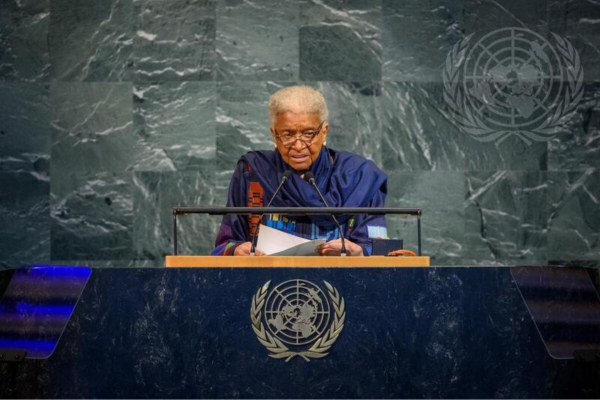
Ellen Johnson Sirleaf addresses the High-Level Meeting marking the UN’s 80th anniversary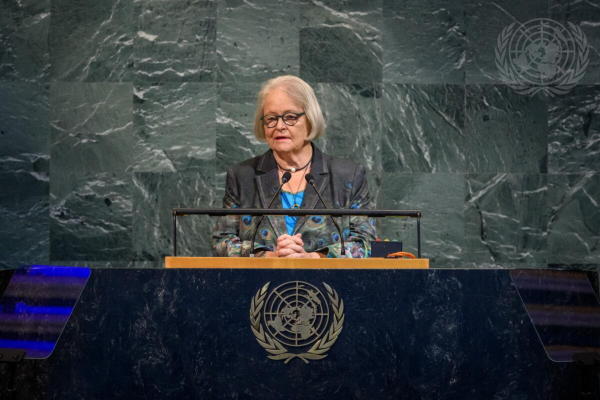
I have witnessed the tangible differences the UN makes
Gro Harlem Brundtland addresses the High-Level Meeting marking the UN’s 80th anniversary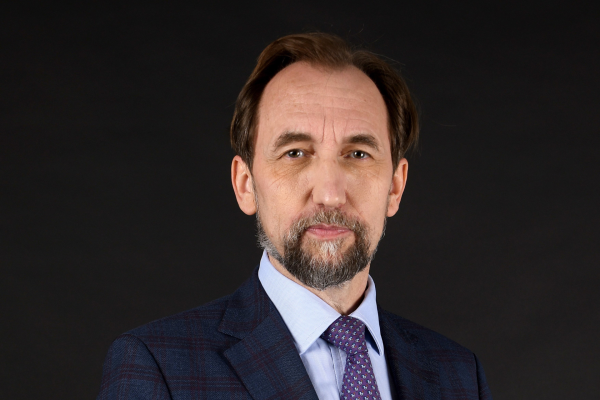
The UN must take the need for reform seriously
Zeid Ra’ad Al Hussein calls for honest reflection and bold reform to rebuild the United Nations’ legitimacy and strength for future generations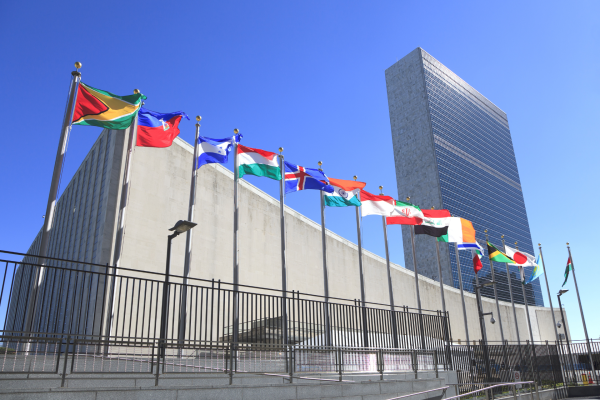
UNGA 2025 - Global cooperation in a fragmented world: proposals for action
The Elders publish a policy paper on multilateralism, setting out a series of recommendations to make global institutions more effective and representative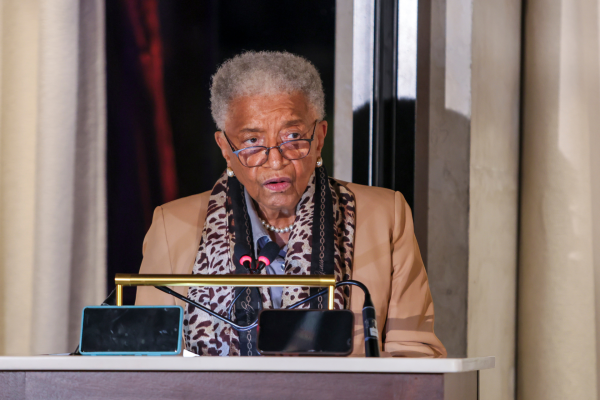
UN Security Council reform is possible, and the General Assembly must lead the way
Ellen Johnson Sirleaf discusses the pressing need for reform of the UN Security Council as the organisation approaches its 80th anniversary.