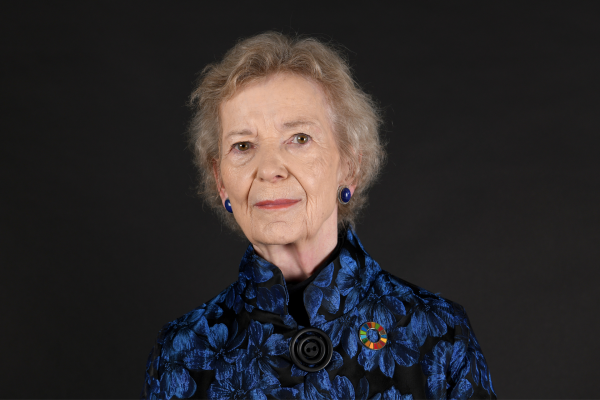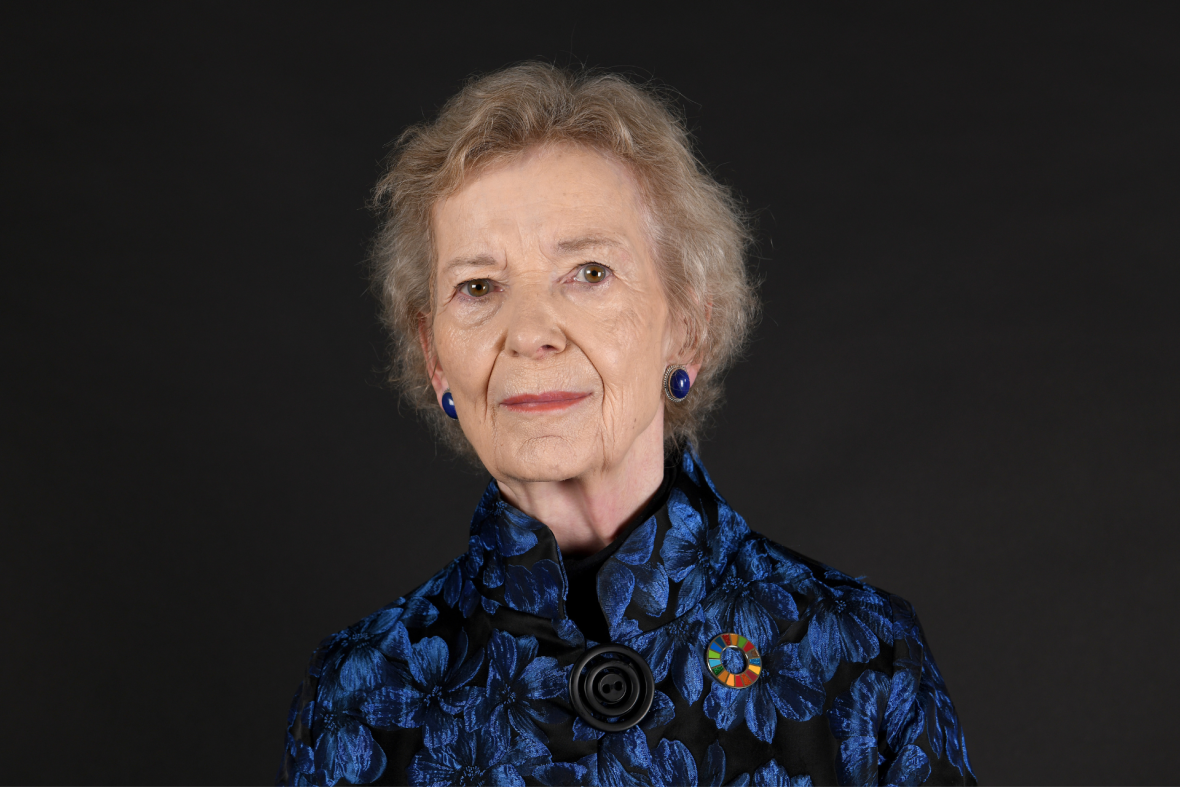
In our latest newsletter, Mary Robinson reflects on her recent trip to the Middle East and the realities she witnessed in the West Bank.
Dear friends,
I have just returned from my first visit to the West Bank since 2023. What I saw then was deeply disturbing, but today the situation is far worse. It is now an emboldened and aggressive process of Israeli annexation of Palestinian land unfolding in plain sight.
Together with my fellow Elders on this visit that also took us to Lebanon and Jordan – Helen Clark, Graça Machel and Hina Jilani – I arrived at a clear conclusion: the government of Israeli Prime Minister Benjamin Netanyahu aims to make Palestine disappear physically, economically, culturally and politically.
This is happening on our watch. The lack of accountability that has allowed Israel to act in this way is unconscionable. The impunity must be stopped.
Travelling in the West Bank, I got a visceral sense of a land and people under ever-more repressive occupation. We visited the Palestinian village of Deir Nidham, whose inhabitants are subject to continuous harassment by violent settlers, with the support of the Israeli army. Settler attacks in the West Bank average six per day since the start of the year, according to the UN.
Israeli flags lined the road to the village – an intentional and threatening claim of ownership in what is internationally recognised as Palestinian territory.
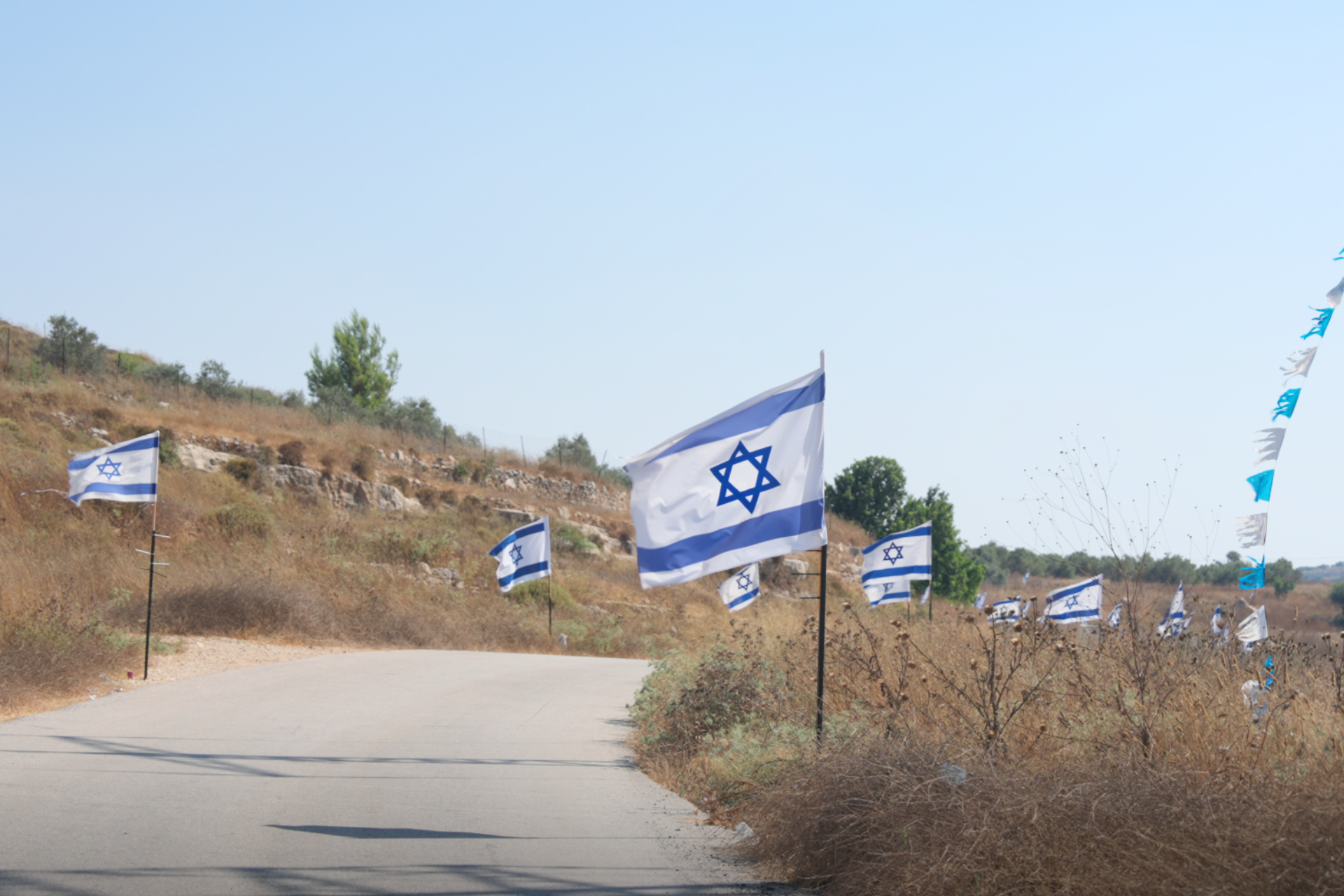
Israeli flags on a road in the West Bank. Photo: Ayman Ramoz
We spoke to a farmer who has been unable to access his olive trees since 7 October 2023. The health clinic now opens only once a month because the Palestinian Authority is facing severe budget constraints due to Israel's withholding of tax revenues.
As we stopped on the side of the road to look at settlement outposts, our convoy had to leave in a hurry as two young settlers approached. We don’t know what their intentions were. But the climate of fear and the authority they are able to exercise are both remarkable and terrifying. This is largely due to the systematic violence they carry out, enabled by the complicity of the Israeli government and its military.
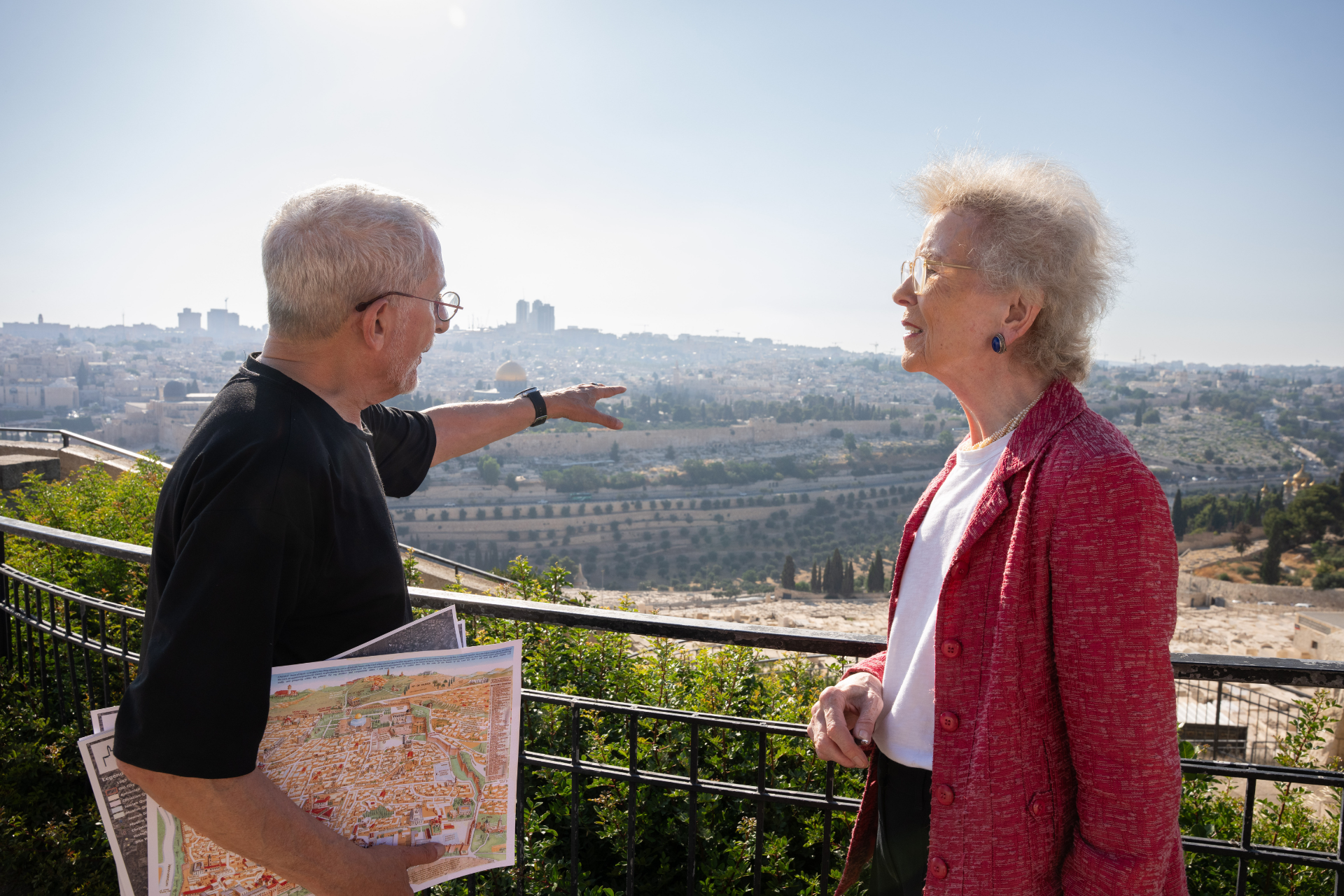
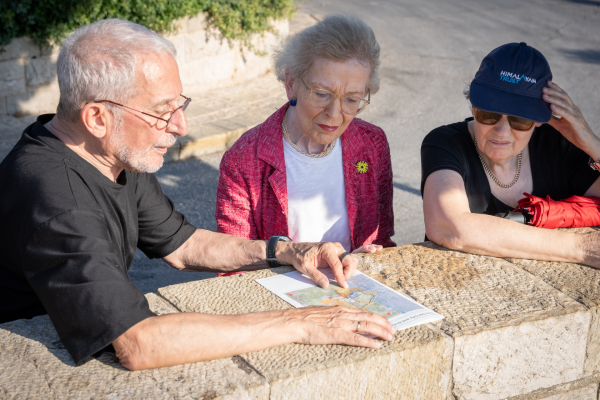
Elders meet with Danny Seidemann, founder of Terrestrial Jerusalem, to discuss the E1 settlement plan and Jerusalem’s holy sites. Photo: Maya Levin
While in Israel, Helen Clark and I met with President Herzog. I have valued our relationship over the years, and it was a robust exchange. He made it clear to us that, in his view, the international community doesn’t fully understand the agony Israel experienced on 7 October 2023. The Elders have always unequivocally condemned these horrific crimes against Israeli civilians, for which Hamas must indeed be held responsible, but these acts do not justify the magnitude and disproportionality of Israel’s response. We shared a concern for the impact on Israeli society, with the increase in domestic violence and the higher suicide rates. President Herzog also spoke of a number of creative political initiatives involving both Israelis and Palestinians.
Other leaders in the region are already open to a different path, one of dialogue and diplomacy. In our conversations with President Joseph Aoun of Lebanon and Foreign Minister Ayman Safadi of Jordan, both shared the same aspiration of a dialogue with Israel based on mutual respect, and to secure a future of peace, dignity and security for the region.
The Elders believe the prospect of a political solution to the Israeli-Palestinian conflict would be improved by the release of Marwan Barghouti, a prominent advocate for a two-state solution, from Israeli prison. Whilst in Jordan, we met with his wife, Fadwa Barghouti, and it was harrowing to hear about his worsening mistreatment at the hands of Israeli authorities.
We concluded our visit by travelling to Brussels to share what we had witnessed with the European Union. It was deeply frustrating to see the lack of political will at the EU level to prevent trade with illegal Israeli settlements in the occupied territories, as the ICJ Advisory Opinion called for, or to suspend the trade pillar of the EU/Israel Trade Association Agreement given the provisions on human rights in Article 2.
And yet, at what is becoming the ‘darkest hour’ for Palestinians, there are some small seeds of hope. We noted the growing interest in a number of joint Israeli-Palestinian political initiatives, such as A Land For All – which The Elders have been supporting – as ways in which the two peoples, Israelis and Palestinians, could live side by side in peace. Furthermore, there was a recent meeting in Rome of representatives of the Saudi-French Initiative which led to the New York Declaration, and a further meeting is envisaged during the UN General Assembly in New York in September. The long-standing right to self-determination of the Palestinian people cannot simply be made to disappear.
With thanks for your ongoing support,
Mary Robinson
Related Content
Palestine must not disappear
A statement by Mary Robinson, Graça Machel, Helen Clark and Hina Jilani following their visit to the Middle East, 11-16 July 2026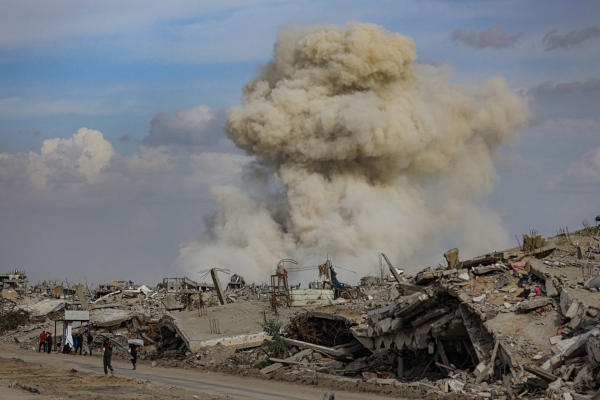
Gaza “ceasefire” rings hollow as all Palestinians face security catastrophe
The Elders warn that suffering for Palestinians continues, despite the ceasefire and the release of Israeli hostages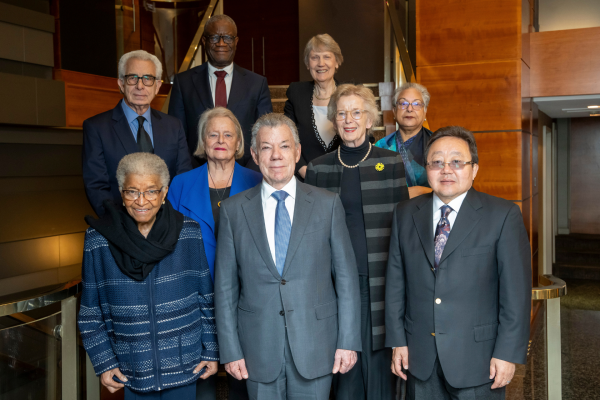
The Elders call for Marwan Barghouti’s release to spur moves to two-state solution
The Elders call for the release of Palestinian leader Marwan Barghouti from Israeli prison as an important step towards reviving a lasting two-state solution.