My message from South Africa: When does silence become complicity?
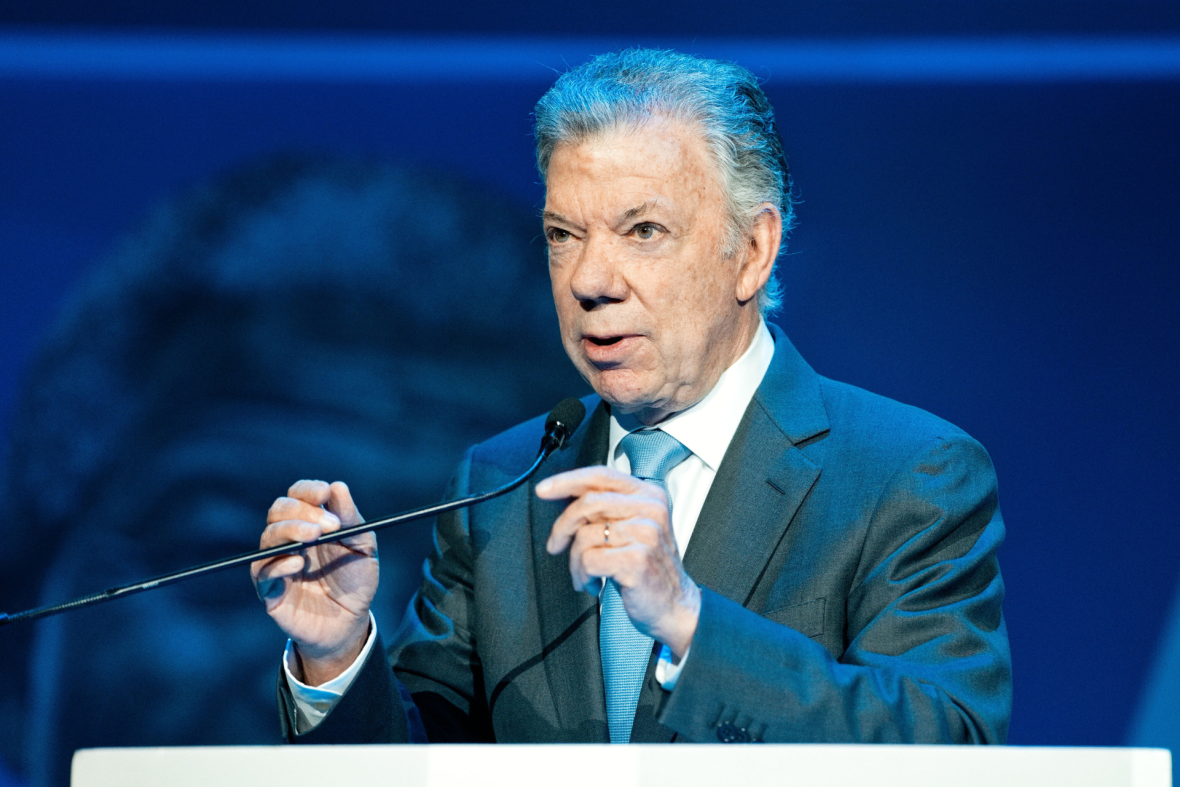
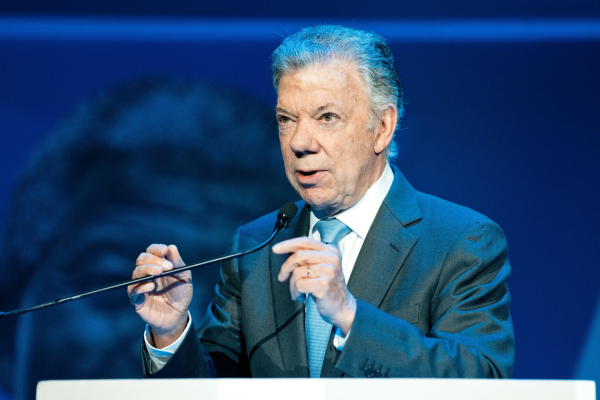
In our latest newsletter, Juan Manuel Santos reflects on delivering the 24th Nelson Mandela Annual Lecture in South Africa and urges leaders to speak out when our shared global values are under attack.
Dear friends,
I have just returned from Cape Town, where I just had the honour of delivering the 24th Nelson Mandela Annual Lecture on “The Moral Weight of Silence”.
This was a moving occasion on many levels. It reminded me of the first time I met Madiba, nearly 30 years ago, on a visit to South Africa when I handed over the chairmanship of the United Nations Conference on Trade and Development from Colombia to South Africa.
In that memorable meeting, he told me that “without peace, Colombia will never take off”. As I said in my lecture, those words helped me set my port of destination: a Colombia at peace.
I returned to South Africa as Chair of The Elders at a moment when several important milestones are converging.
At the Desmond Tutu Foundation, we reflected on the legacy of the Truth and Reconciliation Commission. With the young leaders of One Young World, we looked ahead to the next generation, which must now carry Mandela’s and Tutu’s values forward in an increasingly fractured and polarised world.
These experiences reinforced the same message: truth, memory and courageous leadership remain essential to building peace. In my lecture, I called this the moral weight of silence. We must know when silence is wisdom and when it becomes complicity.
This is a moment when history aligns. We are marking ten years since Colombia’s Peace Agreement, approaching The Elders’ twentieth anniversary, and we do so in a world in which the international rule of law is under growing pressure.
I am proud that Colombia’s Peace Agreement remains an example for the world. Ten years on, it serves as a reminder that even long and brutal conflicts can be transformed through negotiation if political leaders show the necessary courage and commitment to peace. But agreements are only as strong as the commitment to implement them: 50% of all peace agreements fail within the first five years for lack of implementation, and communities across Colombia are still waiting for the full promise of what was signed.
Our leaders also need to show courage and commitment in defence of the international rule of law. The purposes and principles of the UN Charter are openly disregarded. The use of force is being normalised as an instrument of statecraft. Institutions such as the International Criminal Court are attacked and intimidated, while civilians pay the price and atrocities go unchecked. We must not remain silent; instead, we must say loud and clear: might is not right. The international order is weakened not only by those who violate its principles, but also by those who remain silent when those principles are under attack.
Few people have shown this more clearly than Navi Pillay, who defended anti-apartheid activists, including Mandela, before becoming one of the world’s leading champions of human rights and the rule of law. I warmly congratulate her on the 2026 Nobel Peace Prize. Her life reminds us that peace cannot rest on the will of the strongest, but on the strength of the law.
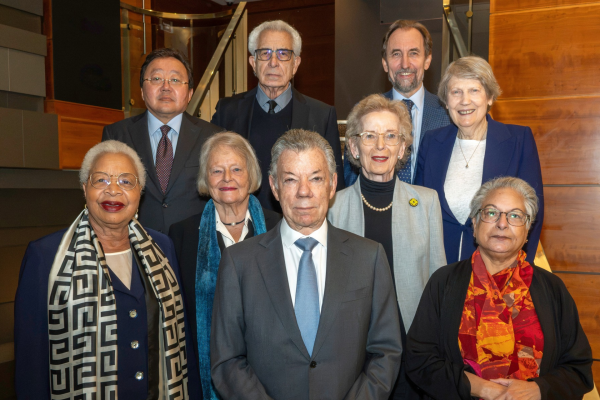
At The Elders’ recent board meeting in London, with my fellow Elders, we were pleased to debate these questions with students from the London School of Economics, where I had studied as a young man. I came away energised and inspired by the students’ commitment, just as I did from my meetings at the One Young World summit in Cape Town.
Even though today’s students were born decades after the end of apartheid in South Africa, Mandela’s message remains acutely relevant as we seek to address contemporary challenges and injustices.
I learned from my years in the Navy that a sailor must always know the port towards which he is sailing. The waters ahead will not always be calm, but the destination has not changed.
Mandela helped me see my port of destination in Colombia. Today, his vision should inspire us all to work for a world where law is stronger than force and our common humanity is stronger than division.
And silence is not an option.
With thanks for your ongoing support,
Juan Manuel Santos
Related Content
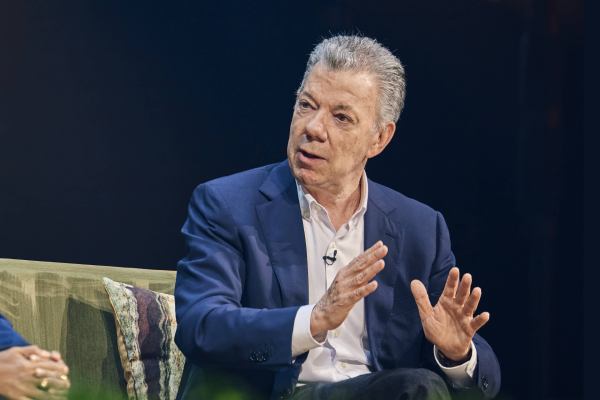
From South Africa to Colombia: The moral weight of silence
Juan Manuel Santos delivered the 24th Nelson Mandela Annual Lecture in South Africa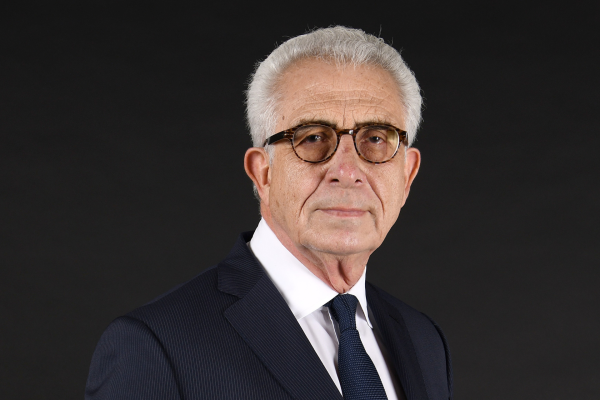
Each violation of international law emboldens others
Ernesto Zedillo explores how the international rule of law benefits us in our everyday lives, and why we cannot afford to take it for granted.